Your data, structured for every report,
footprint, and sustainability claim
For sustainability teams at retailers. Built around
operational data you already have.
operational data you already have.
















Problem and solution
From scattered data to one
structured sustainability dataset
structured sustainability dataset
Without a structured data foundation, every report, footprint, and
sustainability claim is built on a different version of the truth.
sustainability claim is built on a different version of the truth.
01
•
What gets in the way
You cannot trust your own numbers
Your sustainability data lives in spreadsheets and disconnected tools. Errors creep in, versions conflict, and no one knows which number is right. That makes every report slow, messy, and hard to trust.
01
•
How Root solves it
Know exactly where every
number comes from
number comes from
Root structures your dataset with full transparency. Every source and assumption is clear, so you can trust every number you report.
02
•
What gets in the way
Every output means starting from scratch
Whether it is for CSRD, Scope 3, or a product label claim, all footprinting relies on the same product and supplier data. But you have to collect and process it again in separate tools.
02
•
How Root solves it
Collect data once. Use it for every report, footprint, and sustainability claim
Every report draws from the same foundation. No re-collection, no rebuilding data for a different tool.
03
•
What gets in the way
Your team manages data, not impact
Spreadsheets are your only system, so every data update, supplier request, and product-level calculation gets done by hand, every single time.
03
•
How Root solves it
Automation handles the repetitive work
Root uses automated LCA calculations and AI to match your data. Our methodology follows ISO 14040 and 14044 standards. Every result is verified and traceable. Your team spends less time on data and more time reducing impact.
The platform
Built around your data,
not your reports
not your reports
Create the data foundation once. Use it for every report, footprint,
and sustainability claim.
and sustainability claim.
01
04
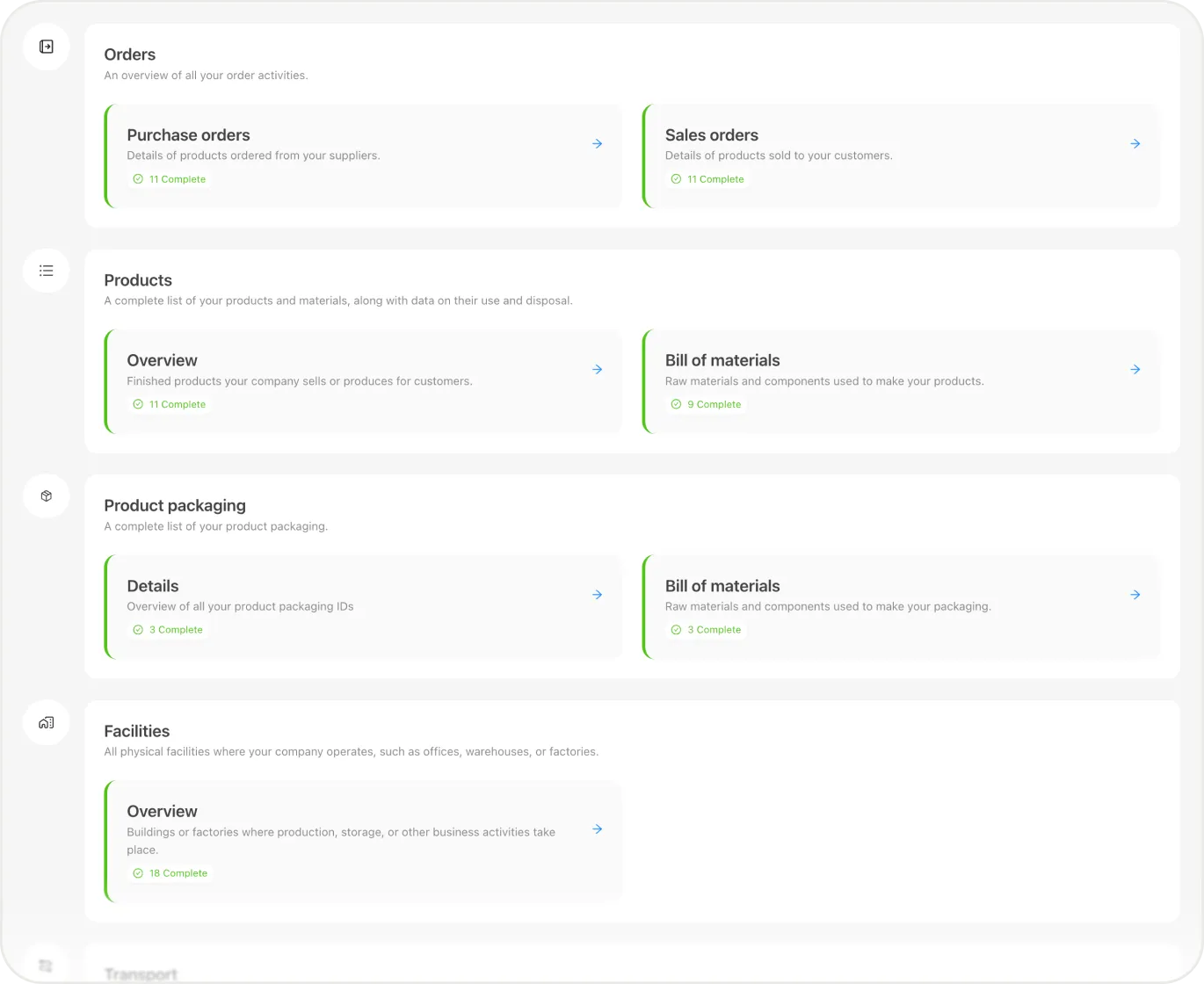
Connect and structure your operational data
Root maps your company, product, and
supplier data into one connected
dataset. It is structured to meet reporting
standards from day one.
supplier data into one connected
dataset. It is structured to meet reporting
standards from day one.
02
04
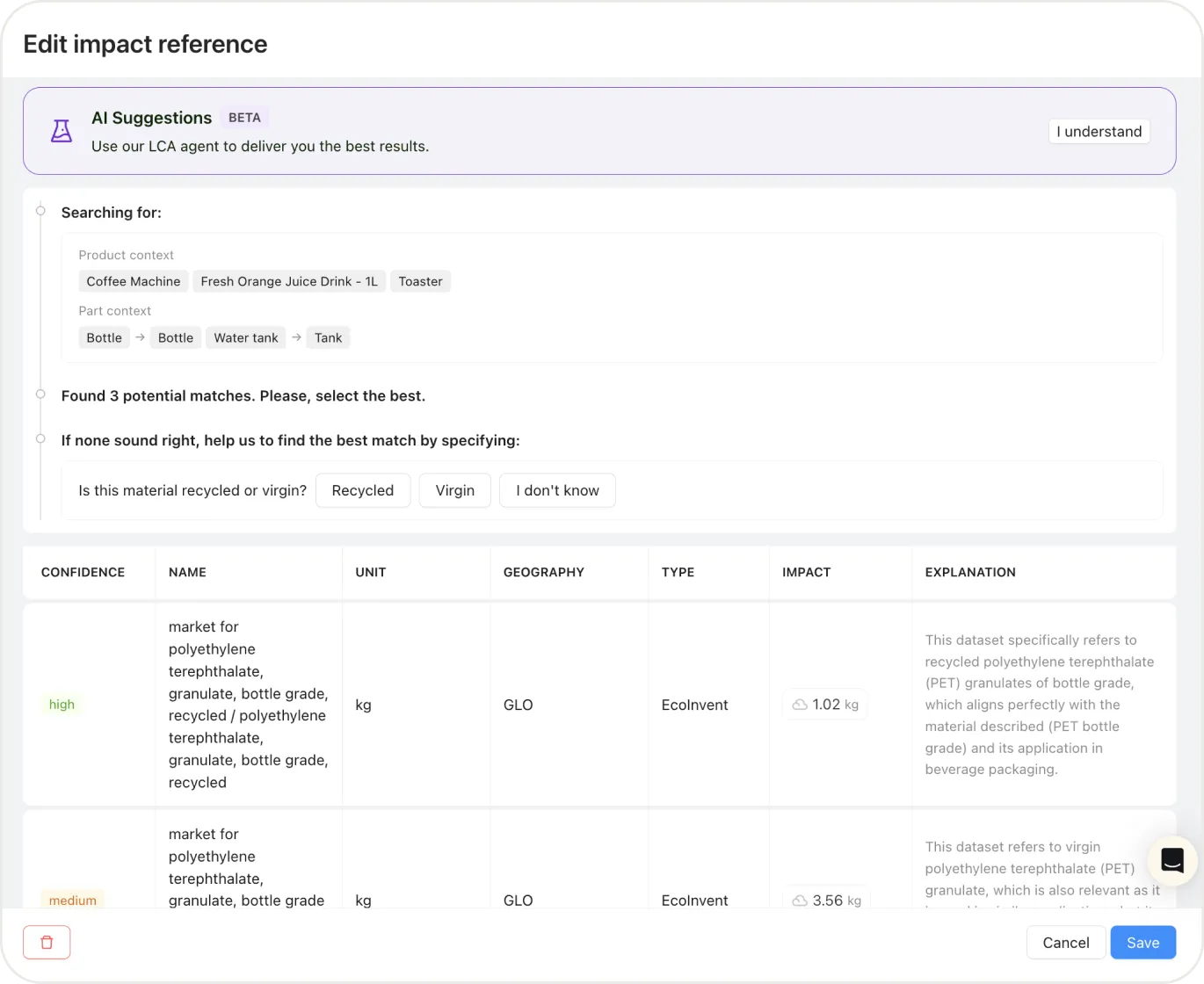
Fill gaps and improve data quality
Root identifies missing data and enables
direct supplier data collaboration. Where
primary data is missing, AI fills the gaps
using recognised emission factors and
verified estimates. You always see what is
measured and what is estimated.
direct supplier data collaboration. Where
primary data is missing, AI fills the gaps
using recognised emission factors and
verified estimates. You always see what is
measured and what is estimated.
03
04
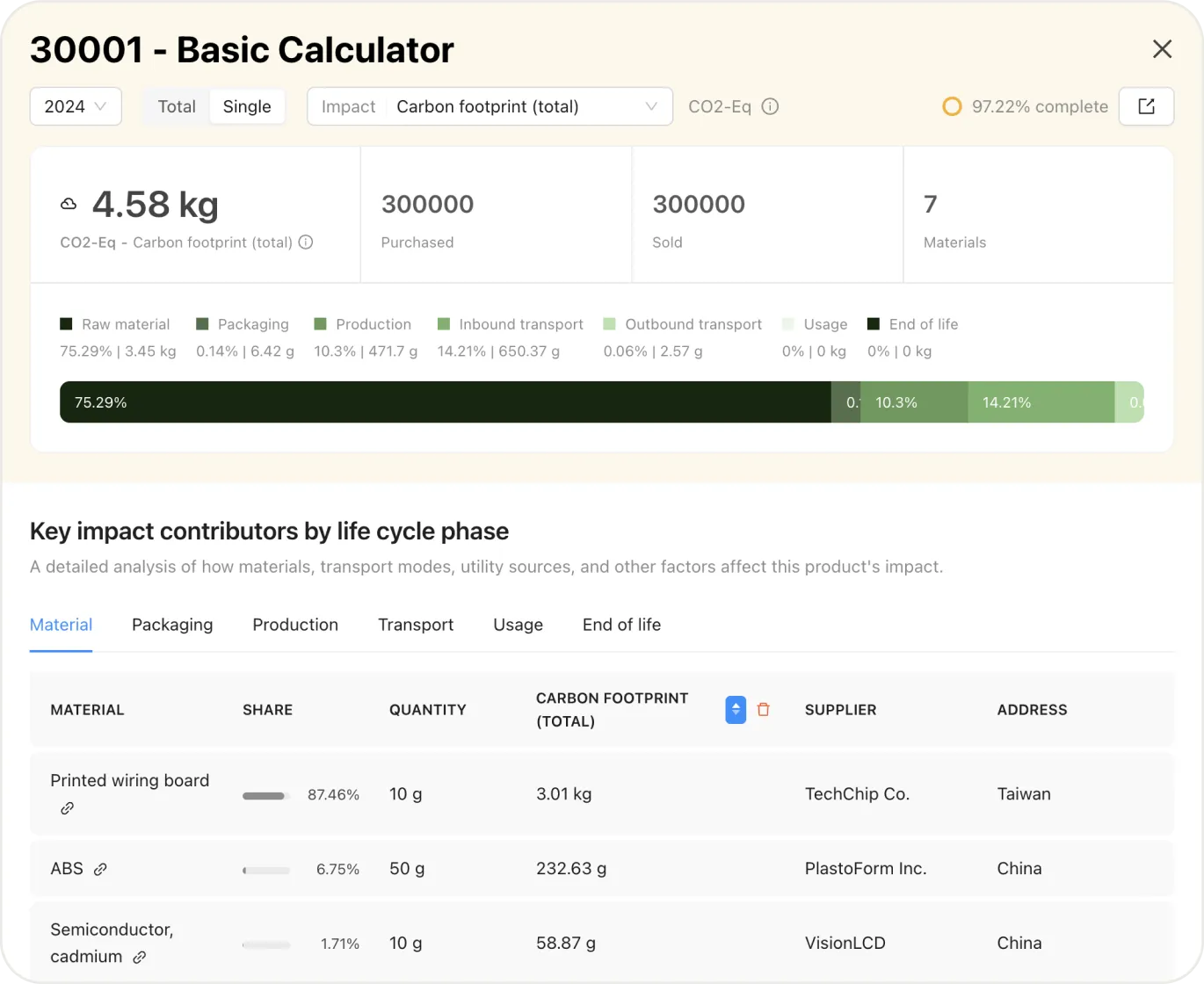
Calculate footprints across your full catalogue
Root automatically calculates product
footprints using our retail-specific LCA
model, aligned with ISO 14040 and 14044.
Every assumption is transparent. Every
number carries a confidence level.
footprints using our retail-specific LCA
model, aligned with ISO 14040 and 14044.
Every assumption is transparent. Every
number carries a confidence level.
04
04
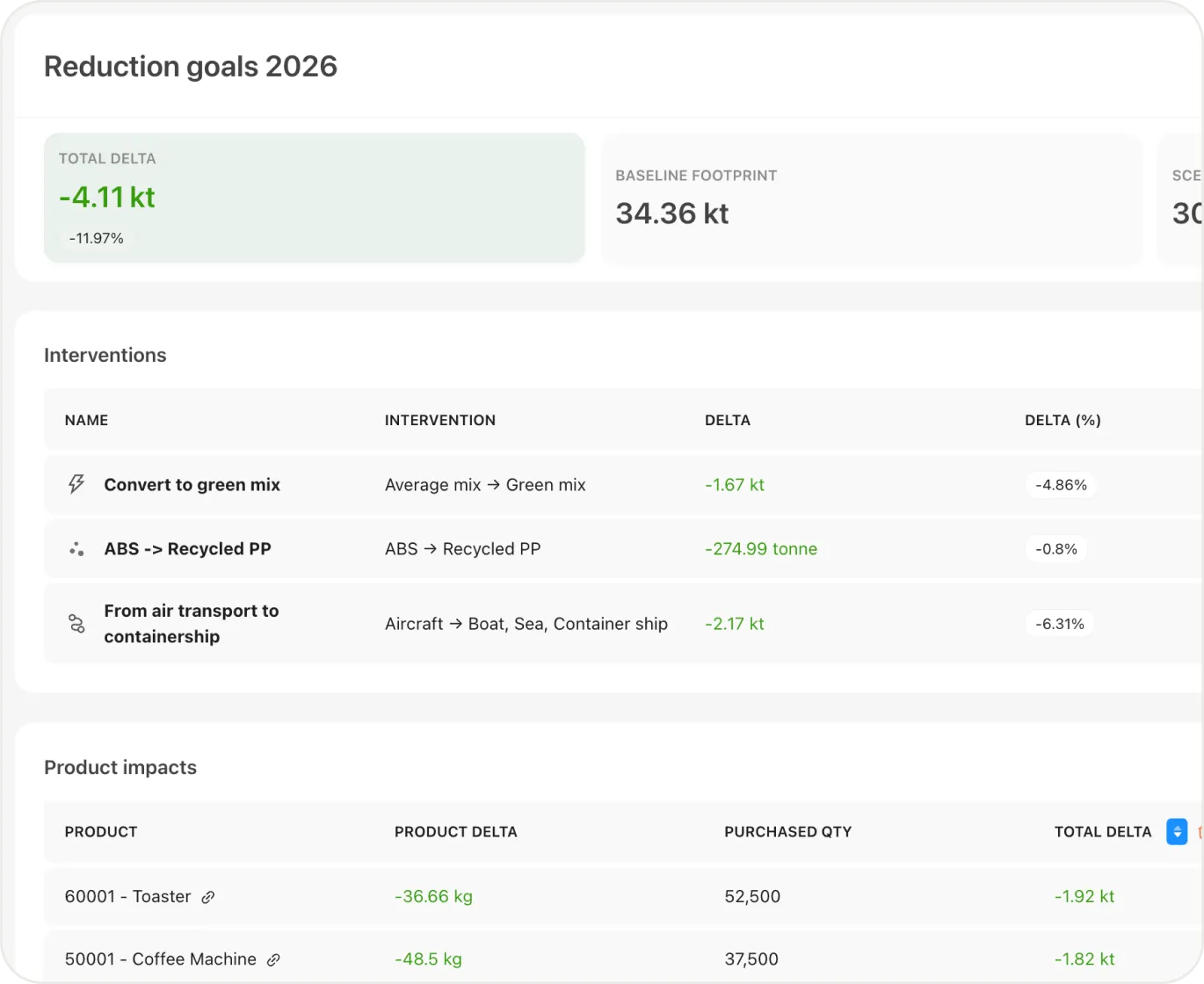
Activate your dataset for every report, footprint, and sustainability claim
Your dataset powers Scope 3, CSRD,
VSME, DPP, PCF, EPD, SBTi, reduction
planning, and much more, all from a
single source.
VSME, DPP, PCF, EPD, SBTi, reduction
planning, and much more, all from a
single source.

ISO 14040, 14044
methodology
methodology

CSRD & VSME
aligned
aligned

Every source
traceable
traceable

Audit-ready
from day one
from day one
Customer stories
challenges to
verified impact with Root
verified impact with Root




Why Root
Most tools add to
the data problem
the data problem
Most platforms are built around one report at a time. Root is built
around your data, so every report, footprint, and sustainability
claim your brand needs can be generated from a single source.
around your data, so every report, footprint, and sustainability
claim your brand needs can be generated from a single source.
Most tools

Force you to reformat data into
their templates before you can begin
their templates before you can begin

Require clean, complete data before
anything works
anything works

LCA calculated manually, by experts, per
product
product

Materials, packaging, transport, and energy
all matched to emission factors manually
all matched to emission factors manually

Built around one report at a time. Each new
requirement needs another platform
requirement needs another platform

Multiple dashboards fed by different data
sources
sources

Either product-level detail or company-wide
reporting
reporting


Upload files as they are. AI reads and
structures your data, whatever format it
comes in
structures your data, whatever format it
comes in

Start with the data you have today, however
incomplete
incomplete

LCA methodology encoded in the platform,
automated across your full catalogue
automated across your full catalogue

AI matching engine guides users to verified
emission factor references
emission factor references

One dataset feeds every report, footprint, and
sustainability claim: CSRD, DPP, Scope 3, EPD,
footprinting, reduction planning
sustainability claim: CSRD, DPP, Scope 3, EPD,
footprinting, reduction planning

One dataset. Create it once. Every report,
footprint, and sustainability claim uses it
footprint, and sustainability claim uses it

Connects product-level detail directly to the
company reports you need
company reports you need
Solutions
How sustainability teams use Root

Product Footprints
You need a verified footprint for every product you sell. Root automates LCA across your full catalogue so you can produce PCF, EPD, DPP, and green claims without expert work on each product.

Corporate Reporting
You need Scope 3, CSRD, and VSME figures you can defend to auditors and regulators. Root structures and documents every data point so your reports are traceable from the start.

Reduction Planning
You need to know where to cut emissions and understand the impact of an intervention before you act. Root shows you the key impact contributors across your portfolio. Model interventions on live data and get the emissions reduction and ROI of each option.
Get started now
Your data is closer
to ready than you think
For sustainability teams at retailers. Built around
operational data you already have.
operational data you already have.
FAQs
Find quick answers to the most common questions about Root,
our methodology, data requirements, and timelines.
our methodology, data requirements, and timelines.
Do I need perfect data to get started?
No. Root is built for real-world data, which is typically incomplete, inconsistent, and spread across systems. You start with what you have, whether that is purchase orders, a bill of materials, or partial supplier data. Root structures what it can, calculates what is calculable, and flags what is missing. From there, it identifies which gaps have the largest impact on your numbers and actively guides you to fill them in order of priority. Your dataset improves continuously as your data does.
How long until I see results?
Most teams have a working dataset within a few weeks. The timeline depends on your catalogue size and data availability, not on manual calculation work on your side. Larger or more complex catalogues take longer to structure, but each step is guided, so the process does not stall on your end.
How accurate is the output?
Root uses established LCA methodology based on ISO 14040 and ISO 14044 standards. Every data point carries a confidence level, and you can add documentation and notes wherever needed. You always see what is estimated versus what is based on primary data, and exactly why. Accuracy builds as your data builds. You are never left guessing where a number came from.
How does AI actually help?
AI handles specific tasks that would otherwise be manual and error-prone. It flags missing data, guides material matching to verified emission factors by asking targeted questions and proposing the best available match, and identifies anomalies in your dataset. It also focuses your attention: surfacing the roughly 10 per cent of data points that typically drive 90 per cent of your impact, so your team works on what actually moves the needle.
When can I get started?
Immediately. The minimum we need is purchase orders, sales orders, and a bill of materials for the products you want to measure. That BOM can be basic: even a single main material per product is enough to begin. Root can create proxies for similar products and start generating your dataset from day one. You do not need to clean or reformat your data before we begin.
We already use another tool. Is it worth switching?
That depends on one question: does your current tool give you a single dataset that powers every report, footprint, and sustainability claim you need, without rebuilding data for each one? If yes, Root is probably not for you. If you are still exporting data between tools, maintaining separate spreadsheets for different frameworks, or starting from scratch each time a new requirement appears, the switching cost is likely lower than the ongoing cost of your current setup. Most teams who move to Root do so because they have outgrown point solutions, not because Root is newer. We are happy to walk through your current setup in a demo and give you an honest assessment of whether it makes sense to switch.
How much internal work does getting started require?
Less than most teams expect. To get started, you need one person who can export your purchase orders, sales orders, and bills of materials. That is typically a sustainability manager or someone with access to your ERP or product management system. Root structures everything from there. You do not need to involve IT, procurement, or suppliers from day one. Most teams have a working dataset within a few weeks. The timeline dependson catalogue size and how readily available your data is, not on manual calculation work on your end. As your data improves over time, so do your results.
